
Are you prepared for the unexpected challenges that can impact your business’s success? In today’s fast-paced and ever-changing environment, having a solid risk management strategy is crucial for navigating potential threats and capitalizing on opportunities.
A well-structured risk management plan template can help you identify, assess, and mitigate risks, ensuring your organization is better equipped to handle unexpected events.
Key Takeaways
- Understand the importance of a risk management plan for your organization.
- Learn how to identify and assess potential risks.
- Discover strategies for mitigating and managing risks.
- Explore the benefits of using a risk management plan template.
- Gain insights into creating a tailored risk management strategy.
Understanding Business Risk Management
In today’s fast-paced business environment, understanding and managing risk is vital for long-term success. Businesses face various risks that can impact their operations, financials, and reputation.
What Constitutes Business Risk
Business risk refers to the likelihood of losses or adverse events affecting a company’s ability to operate effectively. Internal and external factors contribute to the risk landscape.
Internal vs. External Risk Factors
Internal risk factors include operational inefficiencies, employee misconduct, and inadequate financial controls. External risk factors encompass market fluctuations, regulatory changes, and natural disasters.
Common Risk Categories for Businesses
- Operational Risk
- Financial Risk
- Strategic Risk
- Compliance Risk
The Importance of Proactive Risk Management
Proactive risk management enables businesses to anticipate and mitigate potential risks, ensuring continuity and resilience.
Financial Benefits of Risk Planning
Effective risk planning can lead to cost savings by minimizing potential losses and reducing insurance premiums.
Competitive Advantages of Risk Readiness
Companies with robust risk management strategies are better positioned to capitalize on opportunities and navigate uncertainties.
| Risk Category | Potential Impact | Mitigation Strategy |
|---|---|---|
| Operational | Disruption in supply chain | Diversify suppliers |
| Financial | Market volatility | Hedging strategies |
| Strategic | Competitor actions | Market research and analysis |
Essential Elements of a Business Risk Management Plan Template
Developing a robust business risk management plan template involves several key elements that help in mitigating operational risks. A well-structured template ensures that all aspects of risk management are considered, from identification to response strategies.
Executive Summary Section
The executive summary provides an overview of the risk management plan, highlighting the key risks identified and the strategies proposed to mitigate them. It serves as a quick reference for stakeholders to understand the overall risk landscape and the plan’s objectives.
Risk Identification Framework
A risk identification framework is crucial for systematically identifying potential risks. This involves:
- Identifying potential risk sources
- Categorizing risks based on their nature (operational, financial, strategic)
- Assessing the likelihood and impact of each risk
Risk Categorization Methods
Risk categorization methods help in grouping risks based on their characteristics, making it easier to develop targeted mitigation strategies. Common categorization methods include:
- Operational risks
- Financial risks
- Strategic risks
Probability and Impact Scales
Probability and impact scales are used to assess the likelihood and potential impact of identified risks. This helps in prioritizing risks and allocating resources effectively.
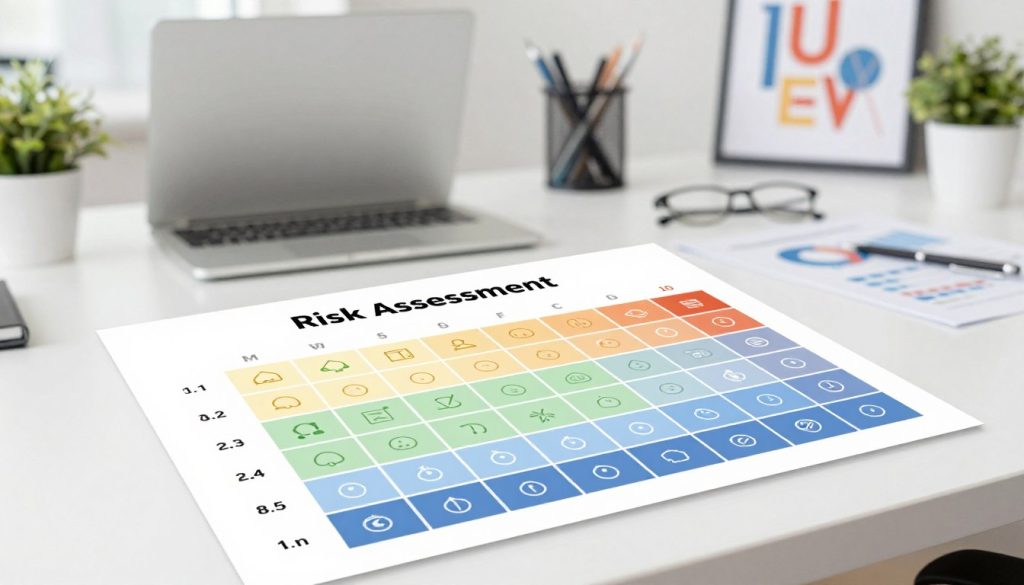
Risk Assessment Matrix
A risk assessment matrix is a tool used to evaluate the level of risk by plotting the probability against the impact. It helps in visualizing the risk landscape and prioritizing mitigation efforts.
Response Strategy Documentation
Response strategy documentation involves detailing the plans and actions to be taken in response to identified risks. This includes:
Mitigation Action Plans
Mitigation action plans outline the steps to be taken to reduce the likelihood or impact of risks. These plans should be specific, measurable, achievable, relevant, and time-bound (SMART).
Responsibility Assignment Charts
Responsibility assignment charts are used to clearly define the roles and responsibilities of team members in implementing the risk mitigation plans. This ensures accountability and facilitates effective execution.
By incorporating these essential elements, a business risk management plan template can effectively support an organization’s risk mitigation efforts and enhance its resilience to potential risks.
Step-by-Step Guide to Creating Your Business Risk Management Plan Template
To ensure business continuity, it’s essential to have a robust risk management plan in place, tailored to your organization’s specific needs. This guide will walk you through the process of creating a comprehensive business risk management plan template.
Establishing Your Risk Management Team
The first step in creating a business risk management plan is to establish a risk management team. This team will be responsible for identifying, assessing, and mitigating risks. It’s crucial to select team members from various departments to ensure a comprehensive understanding of the organization’s risks.
Identifying Potential Business Risks
Identifying potential risks is a critical component of the risk management plan. This involves:
- Brainstorming Techniques: Gathering team members to discuss potential risks and threats to the organization.
- Historical Data Analysis: Reviewing past incidents and losses to identify patterns and potential future risks.
Analyzing and Prioritizing Risks
Once risks are identified, they must be analyzed and prioritized based on their likelihood and potential impact. This can be achieved through:
- Quantitative Assessment Methods: Using numerical data to assess the potential impact of risks.
- Qualitative Evaluation Approaches: Assessing the qualitative aspects of risks, such as their potential to damage reputation or affect customer trust.
Developing Response Strategies
After prioritizing risks, the next step is to develop response strategies. This includes:
- Risk Acceptance Guidelines: Deciding when to accept certain risks based on their low impact or likelihood.
- Risk Transfer Options: Exploring options such as insurance to transfer risk to another party.
By following these steps, organizations can create a robust business risk management plan template that protects their assets and ensures continuity.
Implementing Your Risk Management Strategy
To safeguard against unforeseen events, businesses must implement a comprehensive risk management strategy. This involves several key steps that ensure the effective execution of the risk management plan across the organization.
Communicating the Plan Across Your Organization
Effective communication is critical to the successful implementation of a risk management strategy. It is essential to ensure that all stakeholders understand their roles and responsibilities in managing risks. This can be achieved through regular updates, training sessions, and clear documentation of the risk management plan.
Training Staff on Risk Protocols
Training staff on risk protocols is vital to ensure that they can identify and respond to potential risks effectively. This includes:
- Role-Specific Training Programs: Tailoring training to specific roles within the organization to ensure that employees understand the risks associated with their job functions.
- Simulation Exercises: Conducting simulation exercises to prepare staff for potential crisis scenarios, enhancing their response capabilities.

Integrating Risk Management into Business Operations
To ensure the long-term success of a risk management strategy, it is crucial to integrate risk management into daily business operations. This involves:
- Embedding Risk Considerations in Decision-Making: Ensuring that risk considerations are a key factor in all business decisions, helping to mitigate potential risks proactively.
- Creating a Risk-Aware Culture: Fostering a culture within the organization that is aware of and responsive to potential risks, promoting a proactive approach to risk management.
By implementing these measures, businesses can ensure that their risk management strategy is not only effective but also sustainable in the long term.
Monitoring and Updating Your Business Risk Management Plan
A business risk management plan is not a static document; it needs continuous monitoring and updates to remain effective. This ensures that the plan stays relevant and capable of addressing emerging risks.
Establishing Review Schedules
To keep the risk management plan up-to-date, it’s essential to establish a regular review schedule. This could be quarterly, bi-annually, or annually, depending on the nature and size of the business. Regular reviews help in identifying new risks and reassessing existing ones.
Key Performance Indicators for Risk Management
Utilizing Key Performance Indicators (KPIs) is crucial for measuring the effectiveness of the risk management plan. KPIs can be categorized into leading and lagging indicators.
Leading Risk Indicators
Leading indicators predict potential risks before they occur. Examples include monitoring market trends and assessing the financial health of key suppliers.
Lagging Risk Indicators
Lagging indicators measure the impact of risks after they have occurred. Examples include tracking the number of incidents or the financial loss due to risk events.
Adapting to Changing Business Environments
The business environment is constantly evolving, and the risk management plan must adapt to these changes. This involves identifying trigger events that necessitate plan updates, such as significant changes in market conditions or regulatory requirements.
Trigger Events for Plan Updates
Trigger events are significant occurrences that require immediate review and possible update of the risk management plan. Examples include major changes in business operations or unexpected risk events.
Continuous Improvement Process
Implementing a continuous improvement process ensures that the risk management plan remains effective over time. This involves regularly reviewing the plan’s performance and making necessary adjustments.
By following these guidelines, businesses can ensure their risk management plans remain relevant and effective, supporting overall business resilience and continuity.
Specialized Risk Management Approaches for Different Business Sectors
Businesses operate in diverse environments, each with its own set of risks that demand tailored risk management plans. Different sectors face unique challenges that require specialized strategies to mitigate potential threats.
Financial Risk Management Plans
Financial institutions need to manage risks associated with market fluctuations and credit defaults. Market Risk Templates help in identifying and mitigating risks related to market volatility, while Credit Risk Assessment Frameworks enable banks to evaluate the creditworthiness of borrowers.
Market Risk Templates
Market risk templates are designed to assess and manage risks associated with changes in market conditions, such as interest rates and commodity prices.
Credit Risk Assessment Frameworks
Credit risk assessment frameworks provide a structured approach to evaluating the credit risk of potential borrowers, helping financial institutions make informed lending decisions.
Operational Risk Mitigation Strategies
Operational risk mitigation involves identifying and reducing risks associated with business operations, such as supply chain disruptions or cybersecurity threats.
| Risk Type | Mitigation Strategy | Benefits |
|---|---|---|
| Supply Chain Disruptions | Diversify suppliers and develop contingency plans | Reduced dependency on single suppliers, improved resilience |
| Cybersecurity Threats | Implement robust cybersecurity measures and regular audits | Enhanced data protection, reduced risk of cyberattacks |
Supply Chain Risk Management
Effective supply chain risk management involves assessing and mitigating risks associated with the supply chain, such as supplier insolvency or logistics disruptions.
Cybersecurity Risk Planning
Cybersecurity risk planning is critical in today’s digital age, involving the development of Data Breach Response Templates and conducting IT Infrastructure Risk Assessments.
Data Breach Response Templates
Data breach response templates provide a structured approach to responding to data breaches, ensuring timely and effective action.
IT Infrastructure Risk Assessments
IT infrastructure risk assessments help identify vulnerabilities in IT systems, enabling organizations to take proactive measures to mitigate risks.

Conclusion: Maximizing Business Resilience Through Effective Risk Management
Effective risk management is crucial for businesses to navigate today’s complex and ever-changing landscape. By utilizing a comprehensive business risk management plan template, organizations can proactively identify, assess, and mitigate potential risks, ensuring resilience and continuity.
A well-implemented risk mitigation plan enables businesses to minimize the impact of unforeseen events, protecting their assets and reputation. This is a key component of enterprise risk management, which integrates risk management into the overall business strategy.
By following the steps outlined in this article, businesses can develop a robust risk management framework that supports their goals and objectives. This not only enhances their ability to respond to risks but also fosters a culture of resilience and adaptability.
In conclusion, a proactive approach to risk management is essential for maximizing business resilience. By leveraging the right tools and strategies, organizations can ensure they are well-equipped to handle the challenges of an ever-evolving business environment.